

Brain injuries can affect motor, sensory, cognitive, and behavioral functioning. A person who has sustained a brain injury may find it challenging to return to work or school, or engage in many of the other activities that he or she enjoyed prior to the injury. Individuals may also have decreased balance and coordination, memory impairments, difficulty organizing and sequencing activities, and making decisions. Visual and auditory functions can also be affected by a brain injury. 1
Due to the often multiple array of affected functional life skills associated with a traumatic brain injury, one mode of rehabilitation is usually not enough to address all of an individual’s needs. An interdisciplinary, integrated team approach can play a vital role in the rehabilitation of patients with concussions, stroke or other neurological deficits.
In the care of persons with visual and perceptual dysfunctions following a traumatic brain injury, Occupational Therapy practitioners are key members of the rehabilitation team in helping these individuals improve the quality of their lives and regain their maximal level of independence.
Occupational therapists (OTs) work with other members of the health care team on the assessment and treatment of conditions that affect someone’s ability to perform daily activities that may include self-care tasks or tasks required for independent living and societal integration, such as:
- Caring for others, including pets
- Dressing
- Driving
- Financial Management
- Health management/maintenance
- Home cleaning and maintenance
- Shopping, Meal preparation and Eating
- Organizing time and schedules
- Personal hygiene
- School/Work
- Sexual activity
- Sleep

OT’s work in hospitals, out patient, rehabilitation centers, skilled nursing facilities, nursing homes, in-home healthcare, private practice, and schools.
During an initial visit, the occupational therapist may provide a battery of tests as part of their evaluation. The therapist may test a variety of skills including strength, range of motion, sensory processing skills, gross motor skills, fine motor skills, visual-motor skills, visual perceptual skills, executive functions, and the ability to perform standard activities of daily living. During the evaluation, the occupational therapist will also be interested in knowing the individual’s personal goals.
A treatment plan will be developed based on the results of the evaluations, the doctor’s orders, and the individual’s goals. Additional evaluations during therapy and at the conclusion of therapy are commonly provided to ensure that therapy goals are met.
Occupational Therapists are encouraged to work closely with Neuro-Optometrists and Ophthalmologists to ensure that clients with TBI can compensate for deficits in acuity, visual field, and eye movements.
Occupational therapy practitioners can provide training to improve visual attention, tracking, efficiency in visual processing, and sensory integration that will improve a patient’s posture, body awareness, and the ability to move in a balanced coordinated manner associated with daily life skills. Throughout the United States and Canada, Occupational Therapists cannot prescribe lenses or prisms as these may only be prescribed by a licensed optometrist or ophthalmologist.
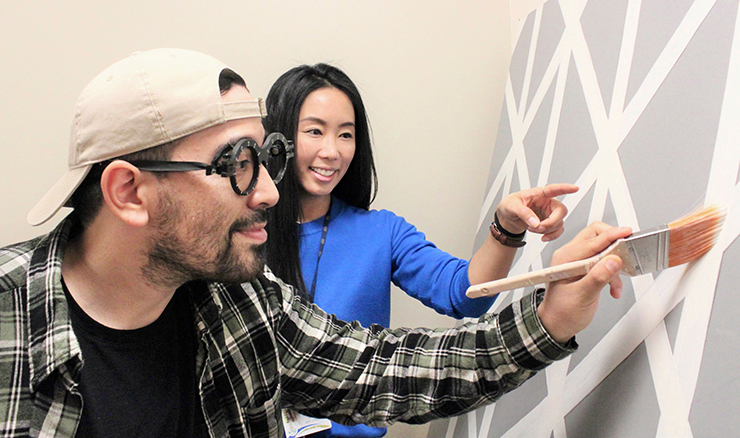
Ultimately, patients benefit from this collaborative care approach. The goal of occupational therapy is to facilitate a patient’s ability to perform with the highest degree of independence possible. When the eye doctor is involved in the diagnosis and treatment of visual disorders, patients have access to the right vision care that addresses their individual needs.
Together, this team of professionals can help patients feel better, live safer, think more clearly, and enjoy engaging in meaningful life experiences.
References
- American Occupational Therapy Association, “Occupational Therapy and Community Reintegration of Persons With Brain Injury,” https://www.aota.org/About-Occupational-Therapy/Professionals/RDP/brain-injury.aspx Accessed 3/1/2021